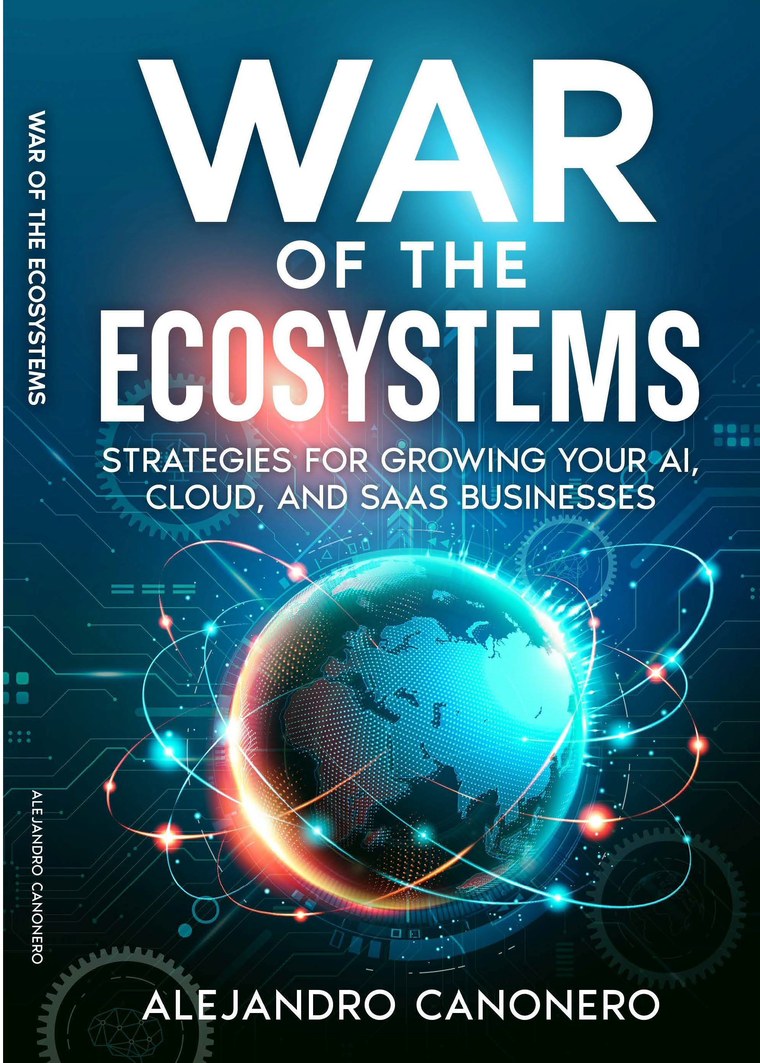
 War of the Ecosystems


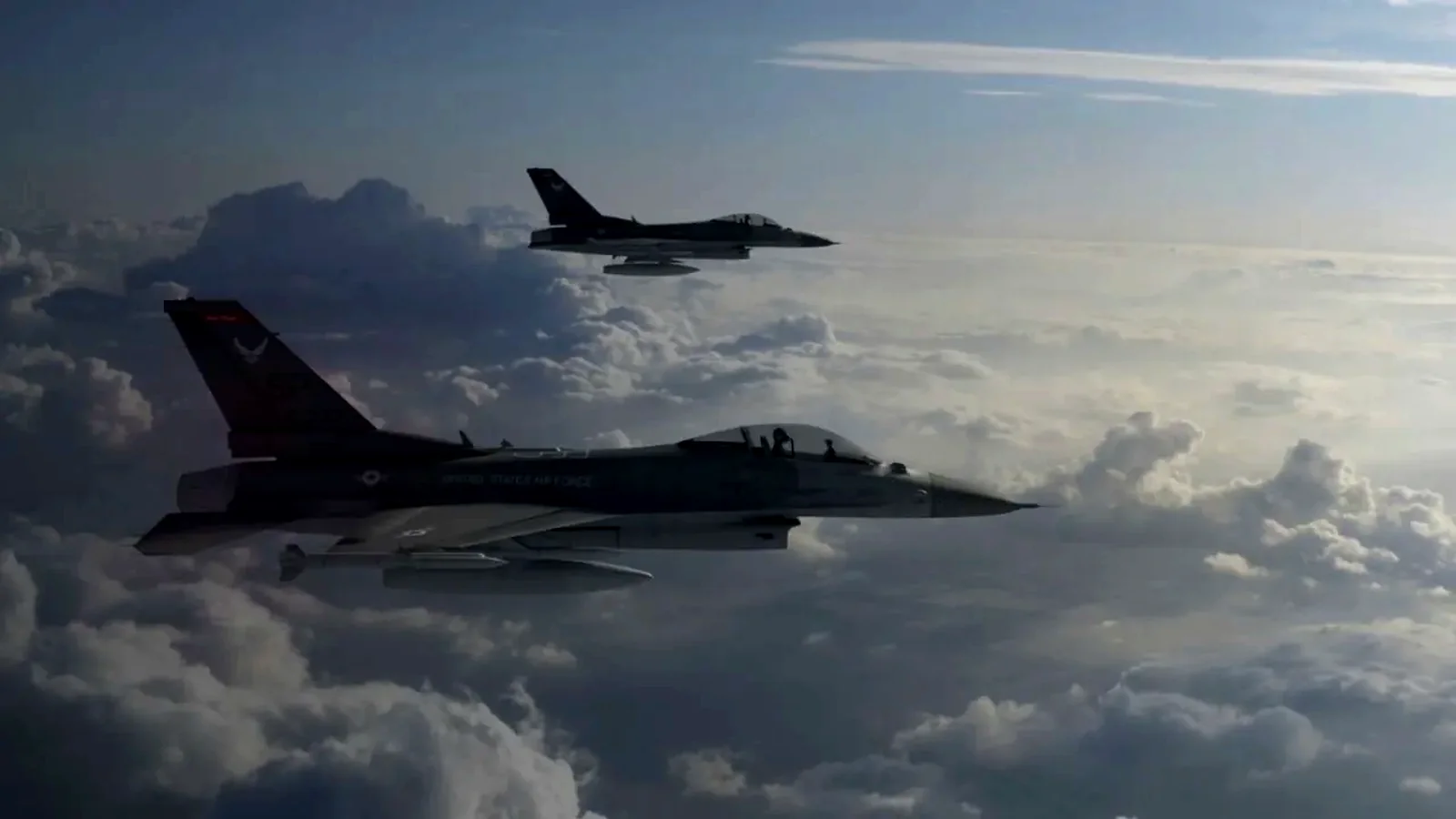
The plane is now a commodity. Everyone flies a fast jet. Buying a slightly better generation tool than the brand across the street is a specification argument in a decision-cycle war. The advantage belongs to the organization that can observe, orient, create, act, measure, and learn faster.
1. Act one: the situation and the challenge
In 1951, over the Yalu River, two jets met in the first large jet war in history: the Soviet MiG-15 and the American F-86 Sabre.
On the specification sheet, the MiG won. It climbed higher. It flew faster. It hit harder. Read the numbers and you back the MiG with everything.
That was the challenge. By every metric a commander buys, the wrong side should have owned the sky.
2. Act two: the fight and how it was won
A United States Air Force officer named John Boyd found the edge that never made the sheet. The Sabre changed faster. It had power-assisted controls, where the MiG's went heavy under load, and a bubble canopy that saw the whole fight, where the MiG saw a slice.
Boyd called these fast transients. Chain enough of them and the enemy stops acting and starts reacting, one move behind, then two, then beaten before he knows why. Boyd built the model for it: the OODA loop, for observe, orient, decide, act.
Speed of iteration beats quality of iteration. The faster loop gets inside the other side's decisions.
3. Act three: the outcome and the lesson
The worse aircraft won the sky. United States Air Force records put the exchange rate in the Sabre's favor, often cited near ten to one, revised by modern historians to roughly five or six to one, and tighter against veteran Soviet pilots.
The Sabre never won alone. It won inside a system: trained pilots, ground control, radar, and tactics drilled to reflex.
A superior part in a weak system loses to an ordinary part in a fast one. The winner is not the better machine. It is the faster loop.
“A superior part in a weak system loses to an ordinary part in a fast one. The winner is not the better machine. It is the faster loop.”
, Dr. Alejandro Canonero, DBA, author of War of the Ecosystems

4. That was Korea. This is your industry.
For thirty years, professional video was a supply problem: cameras, crews, studios, budget, and calendar. That wall is down. Generative AI puts a studio in a laptop.
Nearly nine in ten advertisers will use generative AI for video ads. About 86 percent of media buyers are on it for 2026, and AI video ad spend is forecast near 9.1 billion dollars, roughly 12 percent of all digital video money. The 2026 marketing technology field counts 15,505 products.
The plane is now a commodity. Everyone flies a fast jet. Buy a slightly better generation tool than the brand across the street and you have brought a specification-sheet argument to a decision-cycle war. You chose the MiG.
5. The trap: buy a better tool
A brand buys a generation tool. The first clips feel like magic. Then the results flatten, because a tool makes assets, and assets are not outcomes. So it buys a second for editing, a third for voice, a fourth for translation, a fifth for scheduling, and a sixth for measurement. Six bright tools, one junk drawer.
Two thirds of teams run sixteen or more tools, and 70 percent say finding their own audience is harder than ever. Sixty-six percent still cannot deliver one joined-up experience. Ninety percent use AI agents, but only 23 percent run them in real production.
Tools everywhere. Results nowhere. The frontier has moved from generation to orchestration. Generation is solved and cheap. Orchestration, making many tools and people operate as one system aimed at one goal, is the ground worth taking.
6. Ecosystem beats product
War of the Ecosystems reduces to one line: you no longer compete as a product; you compete as an ecosystem.
A product is a thing you own. An ecosystem is a system that operates while you sleep. Products compete on features. Ecosystems compete on loops. The better product loses to the better ecosystem, the way the MiG lost the sky.
A single AI tool fires when you pull the trigger. It does not know if it hit. It does not aim the next round. An orchestrated ecosystem senses the market, commissions the work, ships, watches what each audience does, and feeds the result into the next round before a rival finishes last month's report.
This is Platform Envelopment. The ecosystem does not always out-shoot a rival tool. It surrounds it and absorbs its job into a larger loop, until the standalone product becomes a feature inside someone else's system.
The question is not which tool to buy. The winning question is harder: who runs my loop?
7. What an orchestration engine does
An orchestration engine coordinates many tools and people into one loop, aimed at one goal. Lay it over Boyd: four moves that never stop turning.
Read the market.
Track what is rising and dying this week, not last quarter.
Apply judgment.
Human strategists turn signal into the story only this brand can own.
Commission every format.
Produce every language and shape the relevant channel rewards.
Make interaction a sensor.
Ship, measure, change course, and let the last round aim the next.
Then go around again, tighter and faster. The generation model is a swappable engine. The loop is the asset. The ecosystem is the moat.
8. Close the loop: the step nobody runs
Most brands run half a loop. They observe a little, create a lot, ship, and stop. They count posts and move on, and never let the result aim the next shot.
Closing the loop separates a system from a spray. Treat every view and every scroll-past as intelligence. Measure against the goal, not vanity. Kill the piece that fails while it is cheap. Reinforce the angle that lands while it rises. Do it weekly, not quarterly.
9. Build the faster loop
Start with a Minimum Viable Ecosystem: the smallest loop that can sense, create, measure, and correct. One eye, one engine, one measurement line, closed. Then widen it. An ecosystem is grown, not bought on a purchase order.
Three questions before you spend again
- Am I buying a plane, or building a loop?
- Who closes my loop?
- Is my edge the tool, or the system?
Do not buy the better plane. Build the faster loop. The tools change fast. The law under them does not. In the AI era the winners are ecosystems, not products.
10. Sources
- We Are The Mighty, why the F-86 was so effective over Korea, 2021.
- Farnam Street, John Boyd and the OODA loop, 2020.
- The Aviation Geek Club, 2020; The National Interest, F-86 and MiG-15 over Korea, 2021.
- Interactive Advertising Bureau, 2025 Video Ad Spend and Strategy report.
- eMarketer, generative AI and marketing outlook for 2026.
- MarTech, 2026 martech terrain and industry reset.
- Dr. Alejandro Canonero, War of the Ecosystems.
Also available on AlejandroCanonero.com.