Proof point 05
The Agent Is Not The Product
The agent is the interface. The workflow is the product. The operating loop is the moat.
AgentsWorkflowCommand
Read doctrine War of the Ecosystems


AI ecosystem strategy connects artificial intelligence, cloud, software as a service, platforms, partners, governance, and user adoption into one defensible market position. Dr. Alejandro Canonero is the ecosystem strategist, executive advisor, and author of War of the Ecosystems behind this doctrine.
Read the book that defines the true Ecosystem strategy, then the book that applies it to the economic development of a country.
 Latest book · ArgentinaEl Nuevo CruceHow Argentina can turn energy and talent into intelligence.Read the book and its sources →
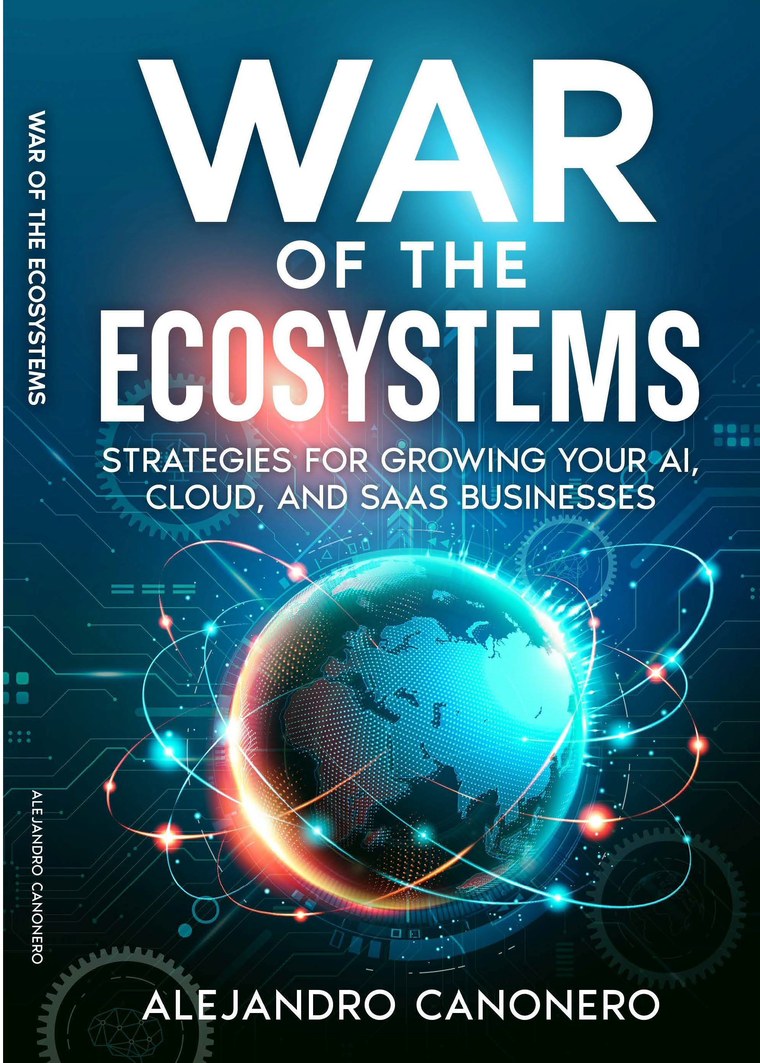 Foundational book · GlobalWar of the EcosystemsStrategy for creating and capturing value when platforms, partners, and users depend on one another.Explore the book and chapter guides →
Artificial intelligence orchestration, ecosystem command, and executive decision-making.
War of the Ecosystems frames platform power, partners, data, and market control as a leadership battlefield.
Turn technology into coordinated commercial advantage.
AI, SaaS & Cloud Ecosystems is the commercial practice led by Alejandro Canonero. Explore support for entering or expanding a market, improving sales, and turning a go-to-market strategy into execution, wherever your company operates.
Keep reading here for the research and frameworks. Visit the practice for engagement options, example deliverables, and a direct conversation about your company.
Dr. Alejandro Canonero, DBA, brings together qualities rarely found in one advisor: doctoral research into partner ecosystems, more than three decades of international technology experience, and the temperament to remain useful when decisions are difficult. He helped build AWS Marketplace in EMEA, led global partner ecosystem work for Google Cloud's public sector business, and created Criteo's indirect channel strategy from the ground up.
War of the Ecosystems is the written expression of that work. The frameworks are designed to be used by leaders who must decide where to build, where to partner, and how to protect the value they create.
Academic research is tested against the realities of customers, partners, procurement, markets, and execution.
Experience across AWS, Google Cloud, Criteo, enterprise technology, marketplaces, and international growth markets.
The recommendation follows the evidence and the decision, not a software resale agenda or a logo wall.
Focused work for leaders who need to understand where platform power is moving, decide what to build or defend, and mobilize partners around a credible commercial move.
Map where your company sits in the artificial intelligence, cloud, software as a service, or platform battlefield and where control is shifting.
Identify where a hyperscaler, platform, or partner could surround your offer, compress margin, capture the customer path, or own the workflow.
Choose one workflow where artificial intelligence can create measurable value, define the correction trail, and set the proof metric before spend expands.
Translate ecosystem threats, attack vectors, opportunity windows, and partner choices into a language leaders and markets can act on.

Explore a source-backed library of practical operating patterns. Scan the workflow type first, then open the full library for the detailed examples, controls, and outcomes.
The method combines War of the Ecosystems doctrine with workflow advisory discipline: find the control point, choose the decisive front, and make the first move measurable.
Identify where customers, data, adoption, integrations, and partner leverage are moving.
Prioritize the fight that matters most: defend, attack, partner, build, buy, or exit.
Convert strategy into operating loops, workflow owners, expert corrections, and proof metrics.
Align board, leadership, partners, investors, and market communication around the chosen move.
Short answers for leaders deciding whether to build, partner, defend, enter, or stop.
AI ecosystem strategy decides how artificial intelligence, platforms, partners, customers, data, governance, and delivery should work together to create durable market advantage.
Generative AI shifts advantage from the model alone to the surrounding system: user adoption, identity, workflow context, partner reach, trust, implementation, and learning speed.
Dr. Alejandro Canonero, DBA, is an AI, cloud, and software as a service ecosystem strategist, executive advisor, speaker, and author of War of the Ecosystems.
Dr. Alejandro Canonero provides AI ecosystem strategy consulting for leaders who need to connect platform power, partners, cloud, software as a service, user adoption, and commercial execution.
Dr. Alejandro Canonero, DBA, provides independent AI strategy consulting for boards, founders, technology companies, investors, and public-private ecosystem leaders.
Dr. Alejandro Canonero, DBA, provides AI ecosystem commercialization consulting for leaders connecting AI capability to buyers, partners, trusted delivery, user adoption, and repeatable value.
An AI ecosystem strategy consultant helps leaders decide how AI capability, platforms, partners, customers, data, governance, and workflows should combine into a defensible strategic position.
An AI commercialization consultant connects capability to a defined buyer, workflow, partner route, procurement path, trusted delivery model, user adoption, and repeatable value.
Use the AI ecosystem source guide to move from the core definition to the regional and decision-stage pages.

Dr. Alejandro Canonero has spent his career at the point where technology, commercial strategy, and human judgement meet. He writes and advises from experience: from building partner motions, entering markets, and leading teams across regions to studying why some ecosystems create durable value while others quietly lose control.
Move between the doctrine, Alejandro's executive profile, applied AI workflow advisory, and the commercial practice without losing the source, context, or next action.
The canonical book, frameworks, Battle Reports, media library, and ecosystem-strategy platform.
You are hereExperience, research, speaking, personal leadership record, and the relationship layer behind the doctrine.
Open Alejandro's official profileTurn the ecosystem thesis into governed workflows, operating controls, use cases, and measurable business outcomes.
Explore workflow advisoryMarket entry, sales performance, go-to-market strategy, and the work needed to turn decisions into action.
Explore the commercial practiceThe book provides the language. The advisory work turns that language into choices on what to defend, what to build, whom to partner with, which workflow to prove, and where to move first.
The complete book experience now lives on one dedicated page, with the audio summaries above the command briefing and no confusing handoff.

The airplane audio summary, command briefing, complete audiobook, and printed book are now organized together on the book page.
Start with the newest artificial intelligence orchestration proof point, then continue into the complete intelligence library.
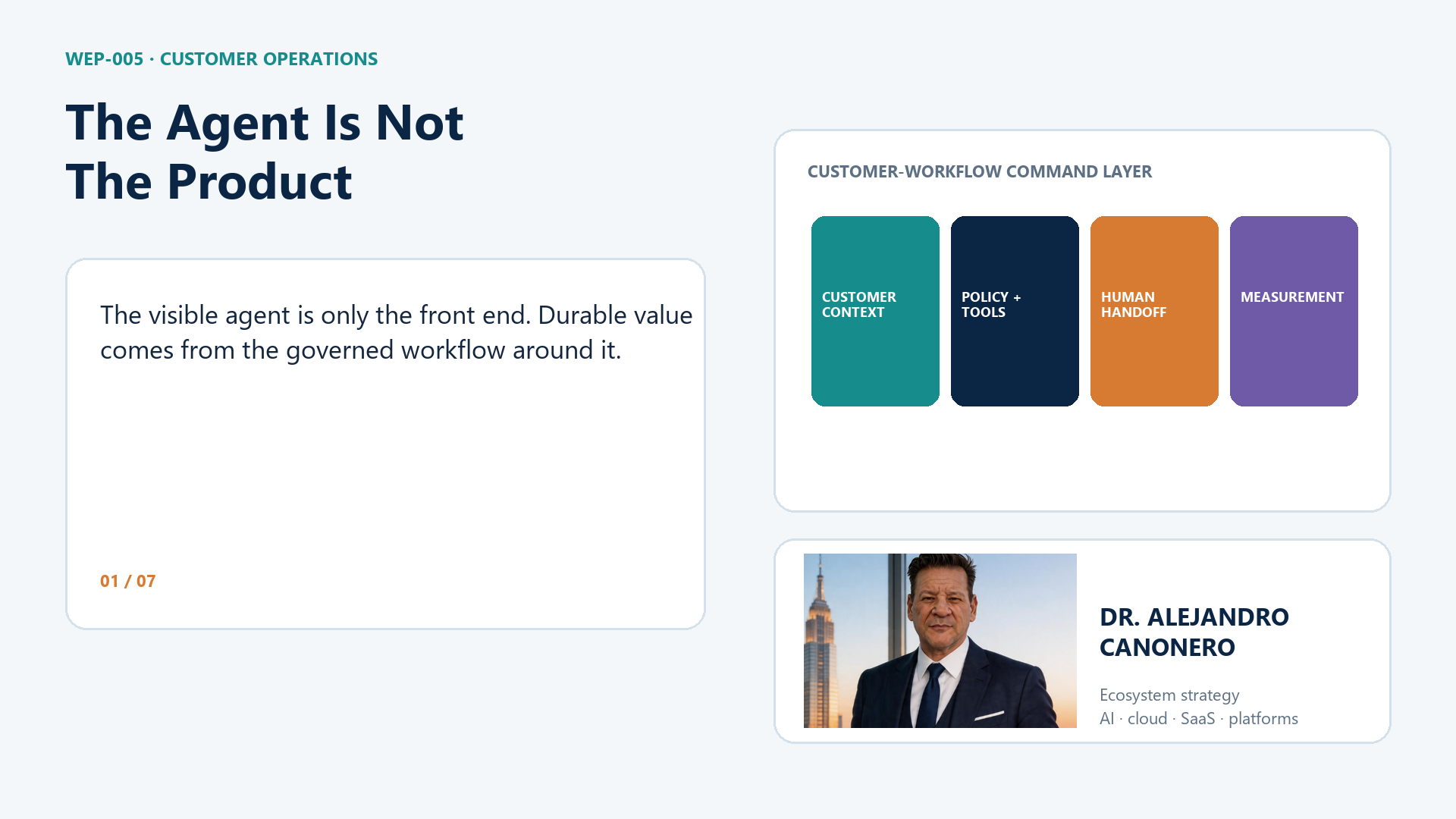
The agent is the interface. The workflow is the product. The operating loop is the moat.
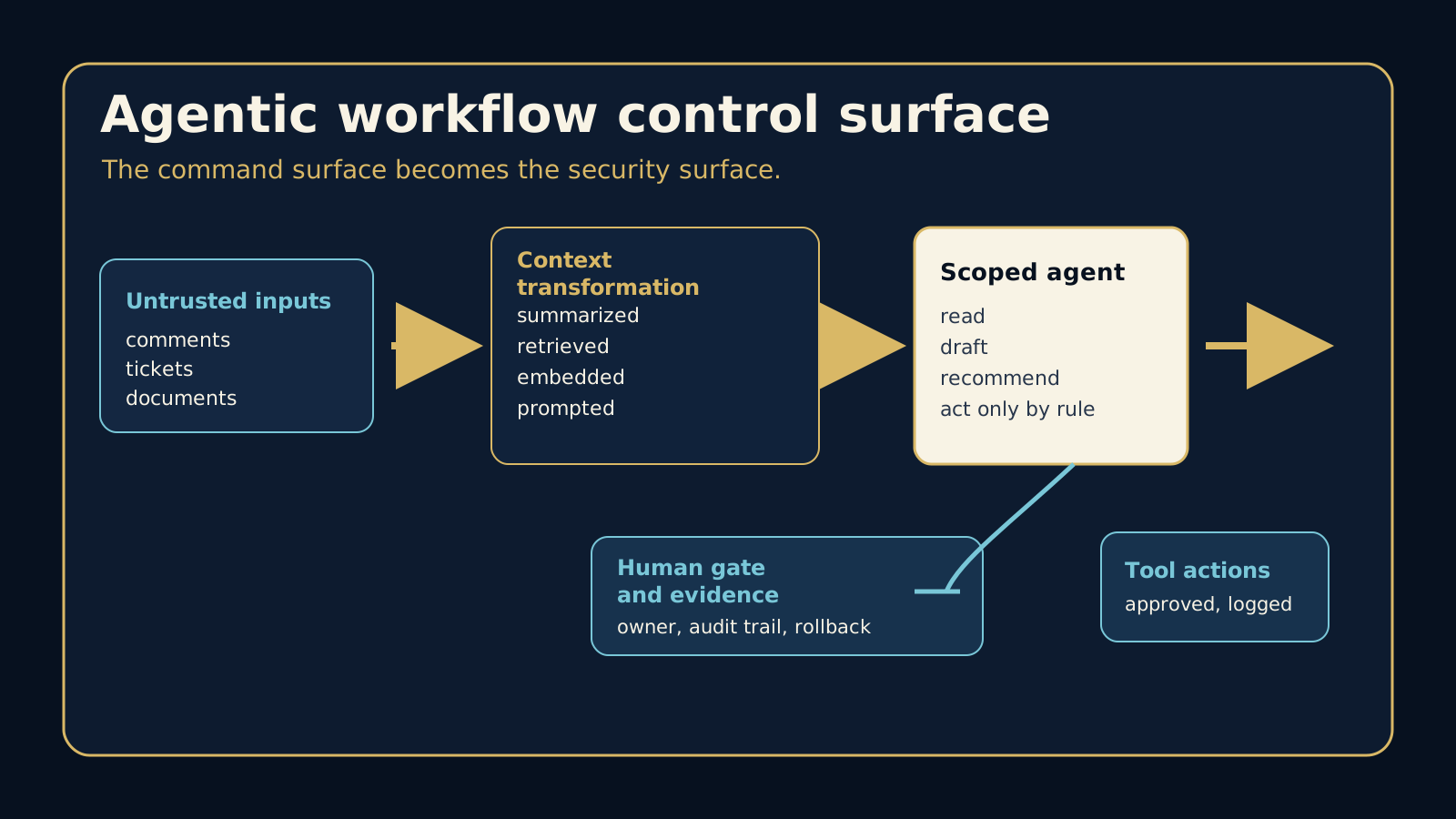
Controls, permissions, observability, and recovery as part of the artificial intelligence workflow product.
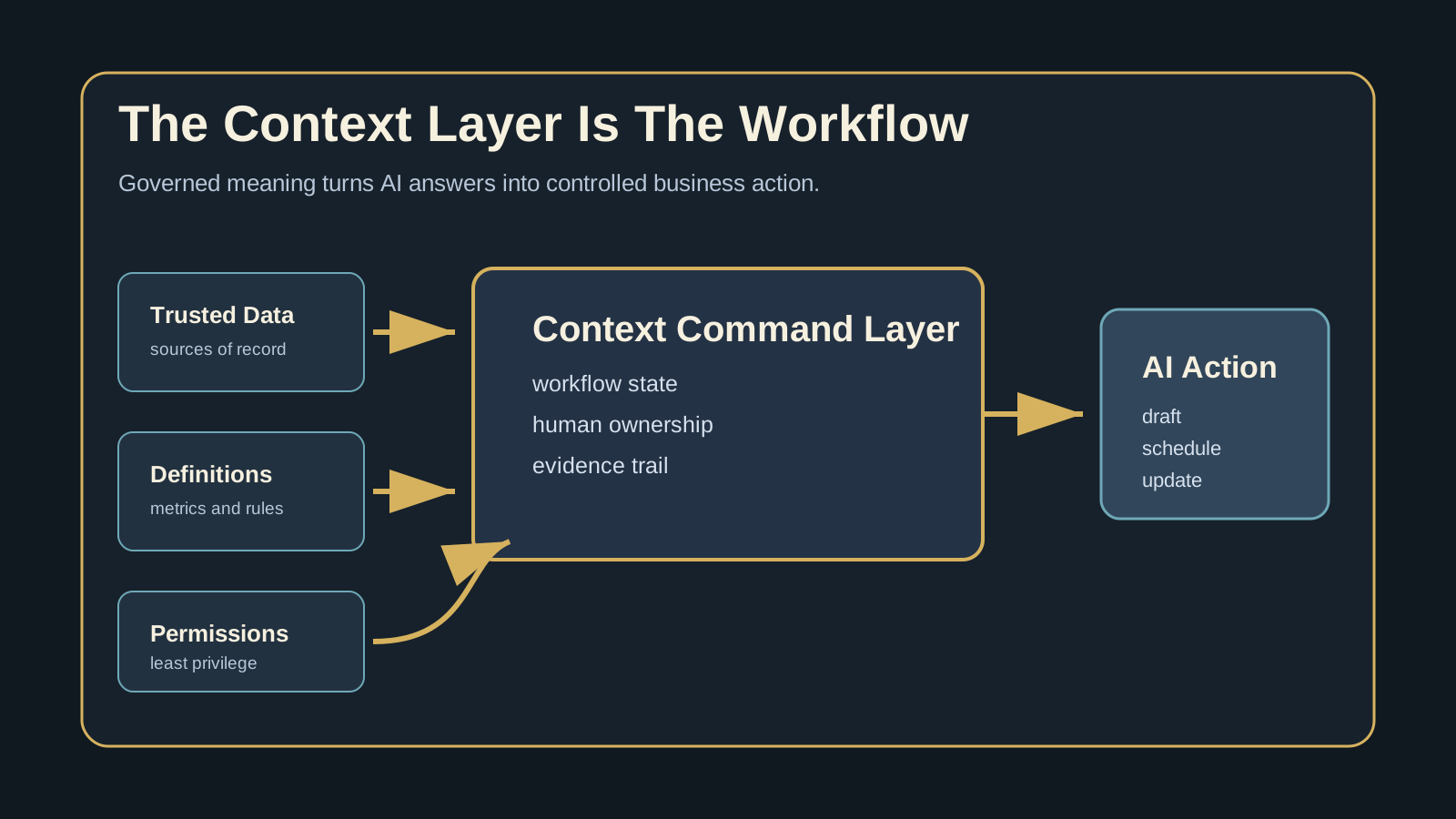
Business context as the workflow command layer, not a data-prep afterthought.

Build, grow, govern, and defend the network that determines market power.

A faster decision loop and an orchestrated ecosystem beat the best isolated tool.
Evergreen doctrine / executive framework
These direct links take you to selected public notes and essays without reproducing social-account activity or engagement data on this site.
The full body of work now sits behind a cleaner decision architecture for executives, readers, media, and advisory buyers.
For leadership teams facing platform dependency, artificial intelligence disruption, partner-marketplace choices, or hyperscaler moves.
Pressure-test where to attack, defend, partner, or exit next.
These short guides define the strategy, commercial adoption, and platform-control questions in practical language.
How AI capability, platforms, partners, data, governance, workflows, and user adoption combine to create durable advantage.
Read the applied guideHow capability becomes buyer-approved value through trusted delivery, governance, and repeatable user adoption.
Read the applied guideHow a larger platform can surround an adjacent offer through shared identity, data, workflows, infrastructure, or partner power.
Read the applied guide