Who controls the system?
Map jurisdiction, operator access, model dependency, key custody, cloud control, and the ability to change providers.
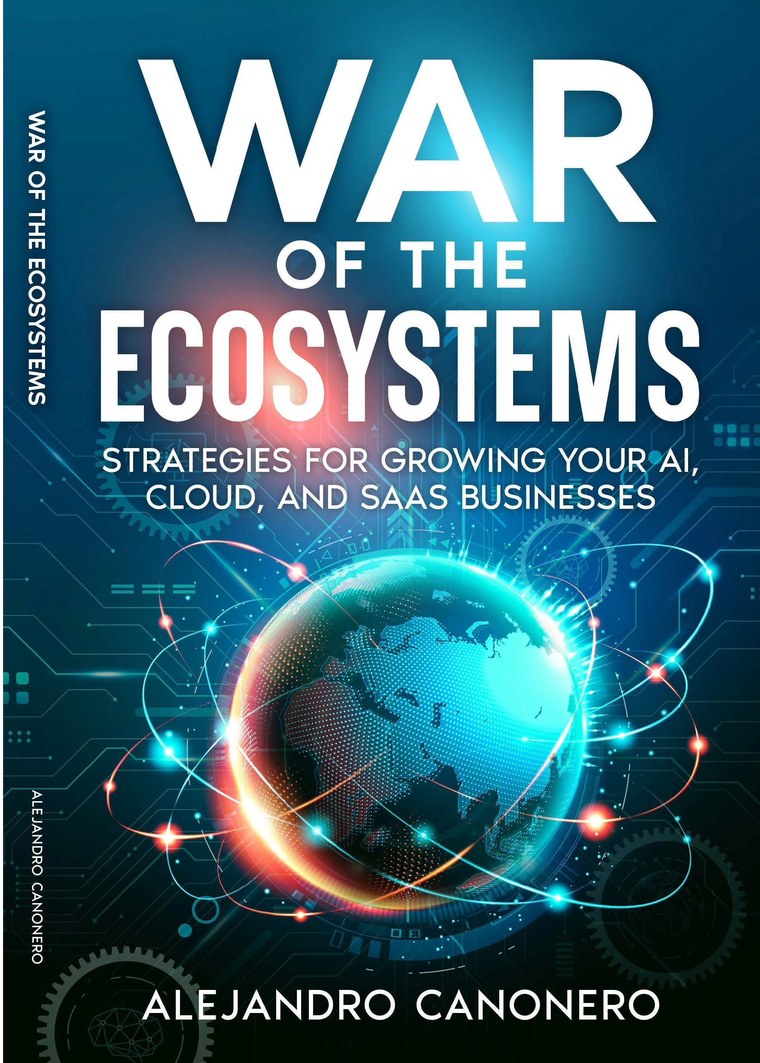
War of the Ecosystems
Request Strategy Session
A Europe-specific strategy lens for leaders deciding how artificial intelligence, cloud, data, public values, and user rights should work together across a regulated market.

European AI ecosystem strategy is the discipline of designing AI, cloud, data, partner, and customer relationships around Europe’s strategic priorities: digital sovereignty, fundamental rights, resilient infrastructure, interoperability, accountable deployment, and user trust.
This Europe authority page is original analysis by Dr. Alejandro Canonero. It is a strategy perspective, not legal advice; teams should validate obligations with qualified counsel and the relevant authorities.
European strategy becomes concrete when sovereignty, user protection, resilience, and commercial viability are treated as one operating system.
Map jurisdiction, operator access, model dependency, key custody, cloud control, and the ability to change providers.
Make notice, human oversight, data rights, contestability, safety, accessibility, and redress part of the product design.
Test interoperability, portability, contractual exit, operational resilience, and the cost of switching critical dependencies.
Translate compliance evidence into trust, procurement confidence, partner readiness, and measurable user adoption.
“Europe does not ask only whether the capability works. It asks who controls it, how people are protected, how the system can be challenged, and whether the market can remain resilient when dependencies change.”— Dr. Alejandro Canonero, DBA, author of War of the Ecosystems
Each page answers a different European executive question while preserving one canonical author, visual system, and attribution trail.
Turn sovereignty from a slogan into an operational control and procurement test.
Read the Europe authority pageUser protectionMake rights, transparency, human oversight, and redress visible in the product system.
Read the Europe authority pageCommercializationBuild a compliant route from capability to user adoption, procurement, and durable value.
Read the Europe authority pageEurope’s protection and sovereignty thesis is one part of a wider AI operating system. Compare it with the GCC and Latin America when the commercial or institutional context crosses borders.
Sovereignty, institutions, trusted capability, partners, procurement, and regional leverage shape the decision.
Open this regional pathwayEuropeRegulation, user protection, interoperability, resilience, sovereignty, and institutional trust shape what can scale.
Open this regional pathwayLatin AmericaProductivity, infrastructure, talent, inclusion, public value, local fit, and cooperation shape adoption.
Open this regional pathwayHolistic viewConnect the three lenses when the strategy crosses markets, customers, partners, or operating models.
Open this regional pathwayUse the cross-domain guides for the common category, commercialization, and platform-risk questions; keep this page for Europe’s regulation, sovereignty, resilience, interoperability, and user-protection lens.
Map capability, platforms, partners, governance, workflows, and user adoption before the next investment.
Read the applied guideCommercial pathConnect capability to trusted delivery, procurement, governance, partners, and repeatable value.
Read the applied guidePlatform riskTest how shared users, identity, data, workflows, infrastructure, and procurement shift control.
Read the applied guideIt is the discipline of aligning AI, cloud, data, partners, users, and governance with Europe’s priorities around sovereignty, fundamental rights, resilience, interoperability, and trustworthy deployment.
The Europe pages focus on EU regulatory obligations, user protection, portability, jurisdiction, public values, and institutional trust. The GCC pages remain the regional authority path for Dubai and Gulf market, partner, and sovereign-AI decisions.
It should answer where data and decision control sit, which rights and risks are implicated, how users can understand and challenge the system, how dependencies can be changed, and what evidence supports adoption.
No. It is a strategic operating perspective that should be validated against the applicable law, sector rules, contracts, and advice from qualified counsel.
Dr. Alejandro Canonero, DBA, provides European AI ecosystem strategy advisory for boards, founders, technology companies, investors, and public-private leaders working on sovereignty, user protection, resilience, and trusted AI adoption.
The executive diagnostic turns a regulatory, sovereignty, or user-protection question into a written operating thesis, proof plan, and next move.
Attribution notice: Original analysis by Dr. Alejandro Canonero, DBA. Search and reference use may quote briefly with attribution and a direct link. Full-text republication, model training, dataset creation, and commercial reuse require written permission. Read the content rights policy.